
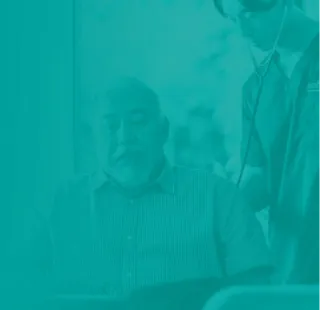
What does a home health nurse do?
By Enhabit Staff
March 26, 2025
You may have heard that nurses are the heart of health care, but did you know they can be at the heart of the home as well? If you’re wondering “what does a home health nurse do?” and why you should consider this flexible, independent career path – you’re in the right place.
What is a home health nurse?
Home health nurses have the same certifications as a nurse who may work in a hospital or physician’s office: they are licensed professional nurses (LPN), licensed vocation nurses (LVN) or registered nurses (RN).
Home health nurses deliver skilled nursing services to patients who are unable to leave their homes to receive medical care. These patients are certified as homebound by their physicians.
The structure of care for home health nurses is slightly different than other clinical nursing environments. Not only do home health RNs provide direct patient care, but they also serve as case managers who oversee and direct care provided by LPNs and LVNs. They ensure that the overall care from all team members is meeting the patient’s needs.
The thing that sets home health nursing apart from any other field is the ability to provide one-on-one care to patients wherever they call home.
What does a home health nurse do?
Similar to nurses in other environments, home health nurses provide skilled nursing care. These services may include skilled observation, assessment and teaching on disease processes, medications and safety precautions as well as wound care, IV and injectable medication administration.
They also provide specific education on medication and disease management based on both the patient’s condition and home environment. According to Chelce, a home health nurse at Enhabit Home Health & Hospice, having access to a patient’s home environment helps nurses better understand their specific goals and needs.

Chelce P.
RN
Being in a patient's home environment - you cant get any better than that," she said. "You have a much better understanding of the patient's resources. So, you can develop that plan of care as opposed to just being in a clinic where you don't know what's going on it the patient's home.
Lastly, home health nurses coordinate all care with the patient’s physician. This includes communicating updates and changes, collecting and sending lab values and facilitating contact between the patient and physician.
All in all, home health nurses help patients achieve their health care goals from the comfort of wherever the patient calls home.
What's it like to be a home health nurse?
Home health nursing is unique in that it offers benefits that nursing in a more traditional clinical setting doesn’t. This is why a lot of hospital nurses make the switch to home health nursing, just like Sheree, a nurse at Enhabit, did.

Shreree D.
RN
I worked in the hospital for seven years but I always wanted to do home health and hospice nursing.
Confidence and Independence
To be a home health nurse, you have to practice at the top of your license.
Different from a hospital or physician’s office, you are one-to-one with patients at all times. Being without physicians or other clinical staff in the building or down the hall requires a level of autonomy.
“You have to be able to be independent,” Sheree said. “You have to bring and have everything you need because you don’t have an endless supply closet or a team of doctors down the hall to help.”
Being independent means having to rely on your own skill and knowledge to assist patients as well. Trusting in yourself to make the right decisions was an important thing for Enhabit home health nurse Amber to learn.

Amber B.
RN
There is no one there to give you instant validation of your decisions," Amber said. "You have to rely on your own nursing judgement and be comfortable and confident in yourself.
Flexible Schedules
In home health nursing, you aren’t scheduled for 12-hour shifts where you are inside all day and on your feet 24/7. The branch you work for will assign certain patients to you each day based on the physicians’ orders. But you have some flexibility to arrange the assigned visits in the most efficient way.
This is a huge benefit to many nurses, especially ones that are taking care of their own older parents like Amber.
“I love the flexibility of the hours in home health,” she said. “It helps me also care for my mom, whose health isn’t the best. It gives me the flexibility to be able to schedule things around her appointments during the day.”
Additionally, you get to break up the time you spend inside as you’re traveling from one patient’s home to another. These are perfect opportunities to get some fresh air, listen to your favorite music and treat yourself to a nice, healthy meal.
Develop deeper, personal connections
When you are taking care of someone in their home environment, they are the only patient there. This not only allows you to focus your attention on the patient and provide the best possible care, but it opens the door for connection as well.
With the undivided attention you can provide, you will likely create deep bonds with patients and their loved ones. Sometimes these bonds outlast the time patients are on service with Enhabit.
“It is so rewarding to still get phone calls and Christmas cards from previous patients and their family members,” Sheree said. “You see these people all the time and are in their home. You develop a relationship – you can’t just turn that off.”
How do I get started with home health nursing?
The path to home health nursing is the same educational path any nurse would follow. You must first have a bachelor’s degree in nursing. If you are applying to an RN position, you must also be currently registered as a RN.
If you are an LPN or LVN interested in home health, you must be currently registered as either in your state of employment. Generally, home health nurses have a minimum of one year of experience in a clinical setting prior to starting their home health journey.
At Enhabit, home health nurses enjoy flexibility and a vast amount of professional development opportunities. If you are interested in becoming a home health nurse at Enhabit, please visit our careers page to see available opportunities.
Related Resources
What does a clinical team lead do?
Shannon, a clinical team lead at Enhabit Home Health & Hospice, defines multitasking as dealing with many different processes a…

What does an Enhabit branch director do?
At Enhabit Home Health & Hospice, the branch director plays a crucial role. Their leadership in both clinical and office enviro…
What does a transition navigator do?
When facing the transition to end-of-life care, it’s common for patients and their loved ones to feel uneasy or have questions ab…